Comfortable
Cool and dry
November to February
See the day tripGuides
Language
Currency
Check open spotsfrom $53 · no cancel feePick-for-me guide
Two questions, one tour
Say when you travel and how you like to spend the day, and a tour appears with its starting price.
Best for you
from $53
A day of 12 to 14 hours from Bangkok in a small group of 9 at most, with 1 hour at the park and 1 hour of hiking and swimming.
Best for you
from $169
A 12 hour day from Bangkok with 2.5 hours at an elephant sanctuary and 2 hours in Erawan National Park.
Best for you
from $415
A private 2-day tour with a night in a floating bamboo hotel and hiking and swimming at the Erawan Waterfalls.
Best for you
from $225
An 8 hour day that starts and ends in Kanchanaburi, with 2.25 hours in Erawan National Park, so the park comes early.
Best for you
from $182
A private day of 11 hours from Bangkok with a guided walk at Erawan Waterfall and then free time, which leaves room to adapt to the weather.
The falls change with the calendar: calm and cool in winter, hot in spring, full and sometimes limited in the rains. Use the Kanchanaburi station's figures and the park authority's own notes to choose your month.
Editorial team, erawanwaterfalltour.quest · Updated November 12, 2026 · Quick read: 7 min
Summary view
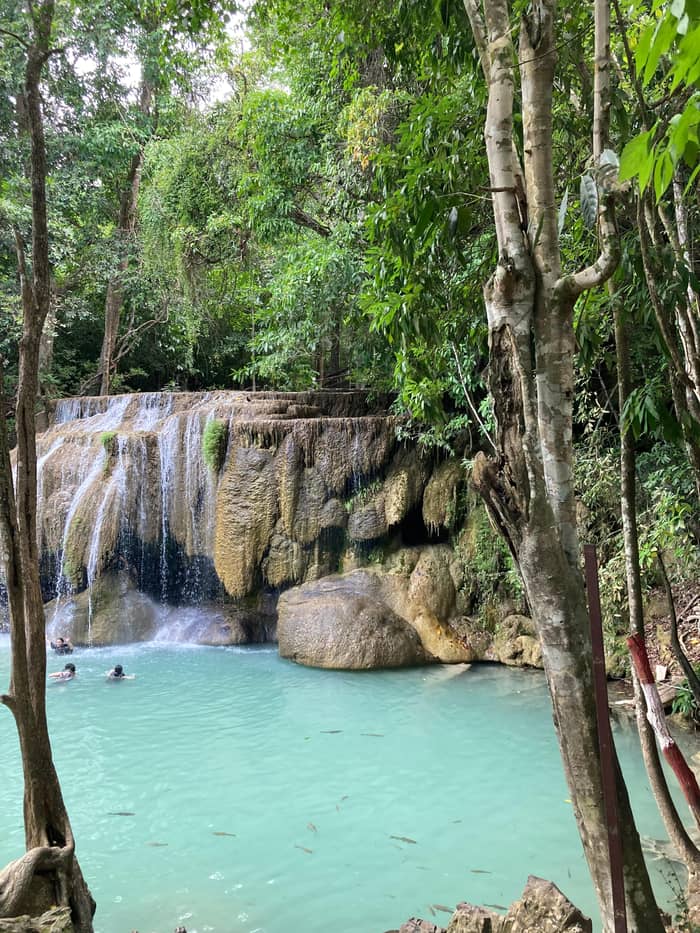
For most visitors the best time to visit Erawan National Park is the cool season. The Tourism Authority of Thailand describes November to February as Thailand's cooler months, with temperatures ranging from 18 to 28 degrees Celsius.1 At Kanchanaburi, the weather station nearest the park, December has an average daily high of 31.8 °C and a low of 20 °C,2 a comfortable range for climbing and swimming in the same day.
The cool months are also the driest. At that station January has an average of 0 days with at least 2.5 mm of rain and 1 mm of rain in the whole month,2 while December has 1 such day and 9 mm.2 Dry weather means stable paths, clear skies for photographs and little risk that the upper tiers close for flood. It is the easiest recommendation we can give, and it works for first-time visitors on a short day trip.
That said, the answer depends on what you want. TAT calls the rains, May to October, a fine time for waterfall adventures and jungle treks,5 and the park authority describes forceful water falling from the elephant head in that season.3 If you prize a full waterfall over a calm one, the rains are the season, with the caveat about floods described below. Choose your month by what matters most to you.
November is the shoulder of the cool season. At the Kanchanaburi station it brings an average daily high of 32.1 °C and a low of 22.1 °C, with 3 days of at least 2.5 mm of rain and 50 mm in the month.2 That is a gentle change from the rains rather than a sudden stop. By December the rain is almost gone: the average high is 31.8 °C, the low 20 °C, and rain falls on 1 day.2 January follows with a high of 33.1 °C and a low of 20.3 °C.2
February starts the climb towards summer. The station records an average high of 35.3 °C and a low of 22.1 °C,2 still within TAT's cool-season window of November to February.1 That makes early February a good compromise for visitors who want warm swimming water and dry paths without the full heat of March and April. The nights remain mild enough that an early start at the park feels fresh, and the first hour at the pools is a quiet one.
What do these months give you at the falls? Reliable footing on the paths, a better chance that every tier is open, and clear light for photographs. The park authority says every tier can normally be visited, and that only floodwater limits the visit to tier 2.6 In the cool season floodwater is not the issue, so the question becomes how much water the falls carry, which is smaller than in the rains. Expect pools that look calm rather than torrential.
Month by month
Displayed: sun-free hours in mid-month, and days with a minimum of 2.5 mm of precipitation. NOAA, station Kanchanaburi (temperature and rainfall), 1991 to 2020.2
Erawan National Park in April is the hottest visit of the year. TAT gives summer, March to May, an average temperature range of 28 to 38 degrees Celsius,7 and at the Kanchanaburi station April has an average daily high of 38 °C and a low of 25.4 °C.2 March is slightly cooler, with a high of 37.2 °C and a low of 24 °C,2 while May is 36.3 °C and 25.2 °C.2 The pools feel welcome in that heat, and the climb does not.
April is also when the park has closed for smoke. The park shut tourism and overnight stays for a time from 21 April 2026 for forest fires and haze; the 24-hour fine dust average had reached 42.9 micrograms per cubic metre.4,8 The park reopened on 22 April 2026, after the fires eased and the air returned to normal.9 Rain is scarce in these weeks: the station averages 2 wet days and 50 mm in April.2
So plan an April visit carefully. Start at opening, carry plenty of water, wear a hat and keep the walk short in the hottest hours. Check conditions the day before: the number is 034-574-222, and the park also posts on Facebook all day and night.10 If haze is bad on the day, a postponement is better than a day in the smoke, and the cool months give a safer alternative if your dates can move, which is worth weighing before you book anything non-refundable.
Pick a season
Comfortable
November to February
See the day trip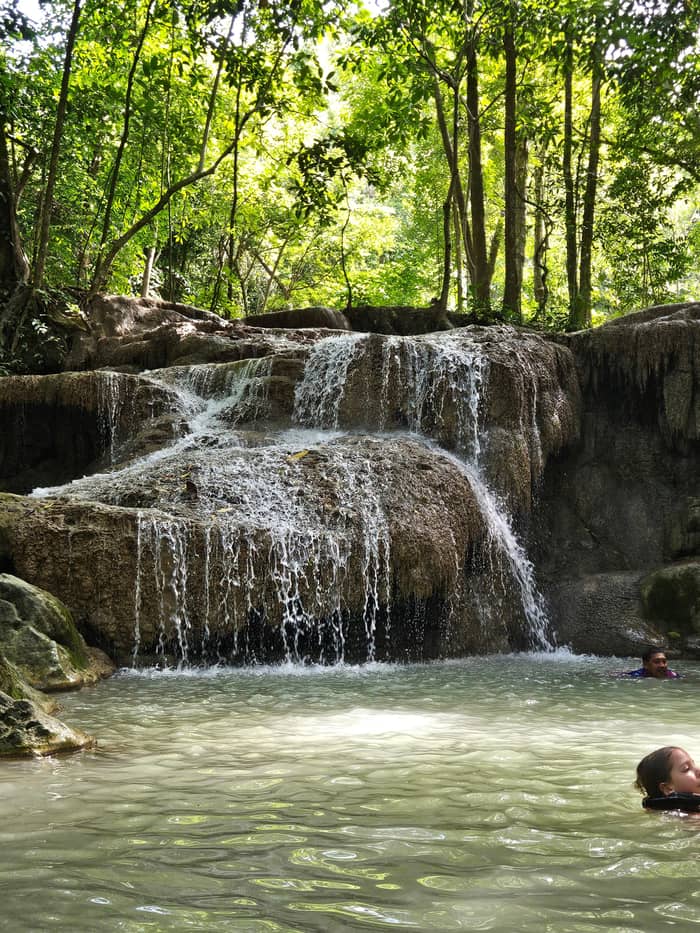
Demanding
March to May
See the day trip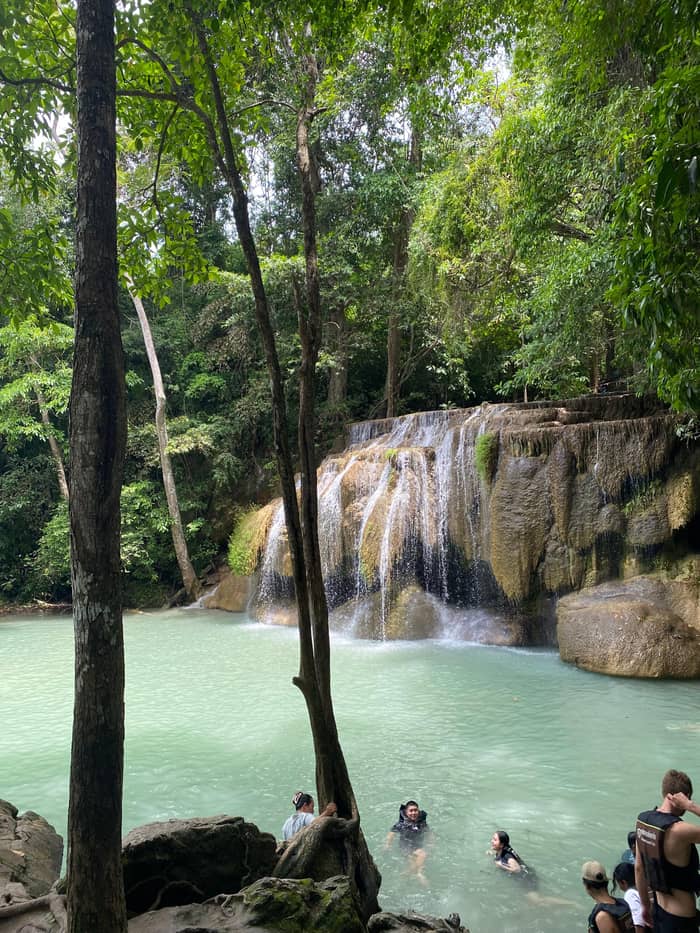
Spectacular
May to October
See the day tripThe rainy season changes the character of the park. TAT dates it from May to October.5 At the Kanchanaburi station the rain builds from May, with 7 wet days and 131 mm,2 and July has 9 wet days and 130 mm.2 The hills turn green, the falls fill and the sound of water carries along the trail. Humidity is high, the forest is lush and every pool looks brighter against the dark wet rock.
September is the wettest month of the record: 12 days with at least 2.5 mm of rain and 249 mm in the month, with an average high of 33.7 °C.2 October still has 9 wet days and 197 mm.2 In those weeks the flood rule matters most: every tier is usually open, yet after floodwater only tier 2 may be.6 A wet-season trip can still be good, but it may be a lower-pool day, and that is no failure.
The park authority describes the spectacle the rains create: forceful water from the elephant head, visible from far off.3 TAT adds that national parks shut certain attractions for part of each year, often when wet-season storms make conditions unsafe.13 Bring a rain jacket, a dry bag and flexible plans, and phone the park before you set out. A wet-season day is at its best when you treat the weather as part of the show and not as an obstacle.
Through the year
The directory has the gate open from 7.30 to 16.00 daily.11 Daylight at the station varies little across the year: about 11.3 hours of daylight in mid-December and 13 in mid-June.2,2 Because the park closes in the afternoon, the early start matters more than the season, and a late arrival cuts the climb short in any month. Check the hour before you leave the vehicle, not after the first pool.
For comfort, arrive near opening. The morning air is cooler than the afternoon, the pools are calmer, the light on the water is gentler and the paths have fewer people on them. In the hot months, from March to May, that earlier start is the difference between a pleasant walk and a hot slog. In the rainy months it also leaves room to retreat if showers arrive in the afternoon, and for a calm last swim before the gate closes.
Think of the day as a sequence. Reach the lower pools first, climb while you are fresh, swim at the middle stretch in the warmth of the late morning and start the descent with enough time to leave before closing. The small-group day trip from Bangkok gives 1 hour for visiting the park and 1 hour more for hiking and swimming, so on a tour the best time of day is simply the time the schedule gives you. Ask the guide to spend the swimming hour at the pool you like best rather than the first one you pass.
Video

ChillVoyageTV on YouTube · The video waits until you tap play to load.
making it the perfect time for waterfall adventures, jungle treks, and immersing yourself in the country’s natural beauty
Plan your month
If you want comfort, choose the cool months. They give the lowest rain, mild nights and stable paths, and TAT's range of 18 to 28 degrees describes the season for the whole country.1 If you want the biggest water, choose the rains, but build in tolerance for closed upper tiers. If you want only a quick swim and have no choice of date, any month works, provided you check the park's situation before you go.
Crowds are another factor, but we have no official figure for them, so we will not guess. What we can say is that the park ranked 8th among national parks by entrance fee income in fiscal year 2025,14 which suggests a busy park in many months. Weekday visits and early starts are the most reliable ways to find space at the pools in any season, whatever the sky is doing. A flexible plan beats a perfect one.
Do not forget your fellow travellers. Children and older visitors do better in the cool months, when the walk is easier. Photographers who like full water can aim for the early rainy season, when the falls are strong but the paths are still manageable. Bird and nature lovers can choose any month, with insect repellent, as the CDC recommends long sleeves, long trousers, hats and repellent here.12
FAQ
TAT describes these months as the cool season, with temperatures ranging from 18 to 28 degrees Celsius.1
Floodwater can leave only tier 2 open to visitors.6
The Kanchanaburi station averages a daily high of 38 °C and a low of 25.4 °C in April.2
At the Kanchanaburi station September has 12 days with at least 2.5 mm and 249 mm of rain.2
The directory has the gate open from 7.30 to 16.00 daily.11
The nearest long record with temperature and rainfall is the station at Kanchanaburi, 1991 to 2020 averages.2
In the rainy season the water plunges forcefully from the elephant head and can be seen from far away.3
Sources
Further reading
Planning a day at Erawan Falls? Ask a real person here.