Easy
Lower pools
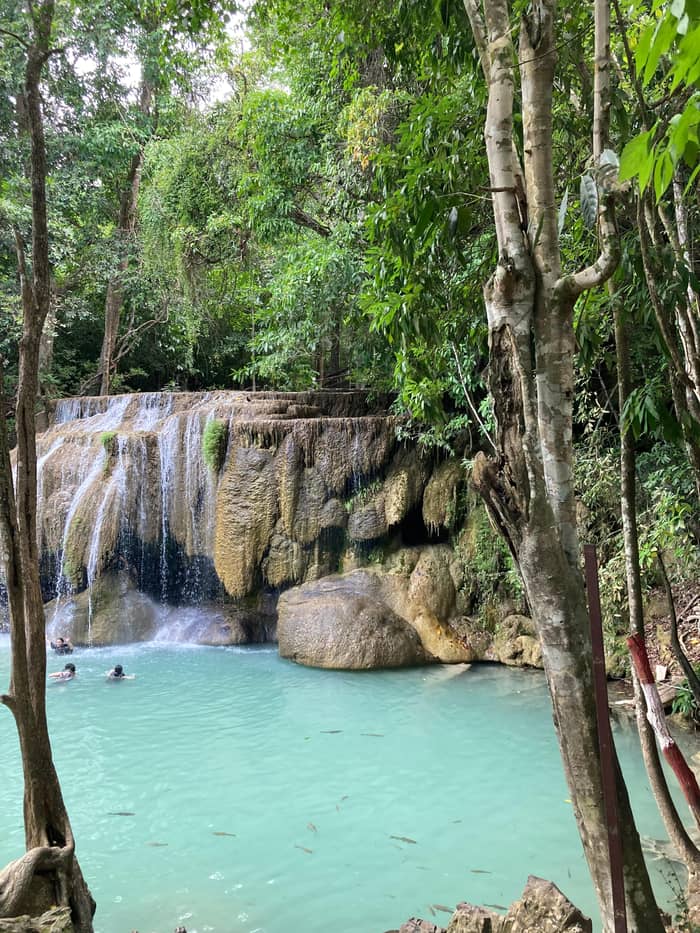
Closest to the start
- EffortShort walk
- CrowdsBusiest
- Opening7.30 to 16.0010
Guides
Language
Currency
Check open spotsfrom $53 · no cancel feeLook up your stop
Find out about 20 stops
Pick a route and tap a pin or a stop: you get its note and a Google Maps link.
MBK Center in Bangkok, where the day trip lists its meeting point on the ground floor.
Google MapsThe JEATH War Museum in Kanchanaburi town, the first stop of the day trip after the drive from Bangkok.
Google MapsThe Bridge on the River Kwai in Kanchanaburi town, one stop of the home tour on the way to the park.
Google MapsThe falls and the start of the trail, in the east of the park near the headquarters.
Google Maps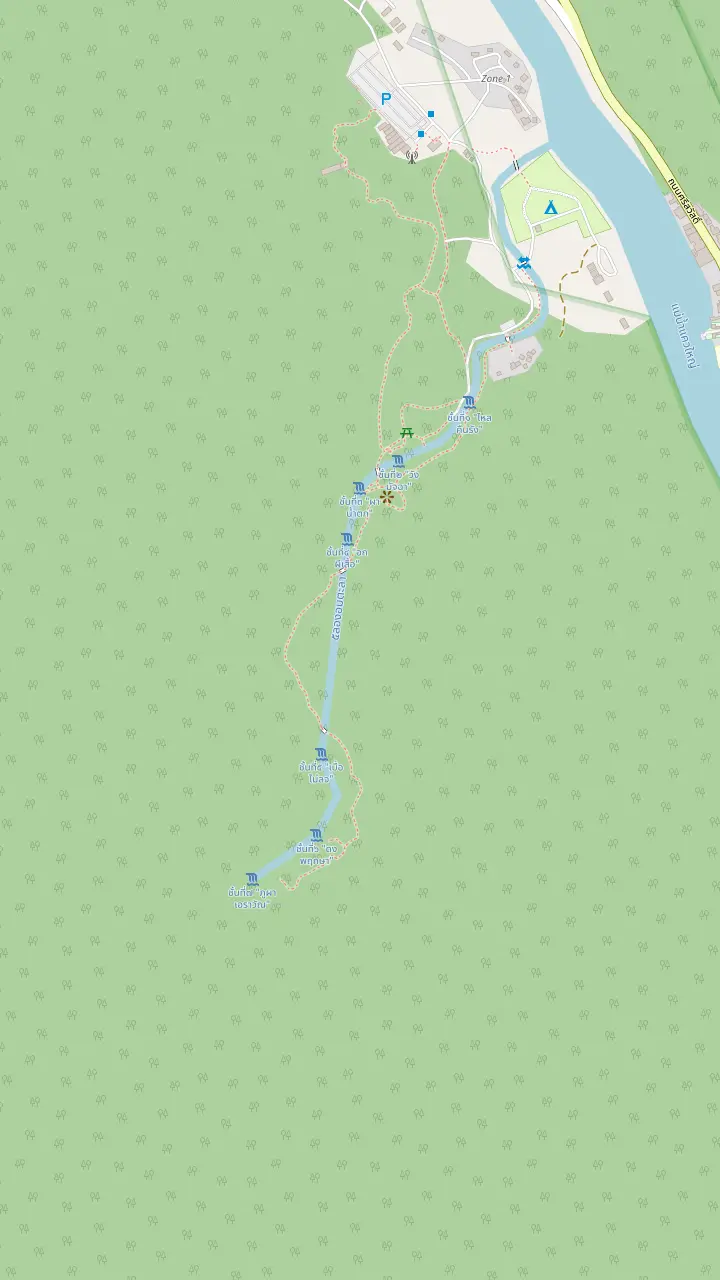
The lowest pool of the staircase, nearest to the start of the path.
Google MapsThe park authority picks this tier for its water sliding down a rock slope; the nature trail starts here.
Google MapsA pool on the way up, where the path begins to leave the busiest water behind.
Google MapsA middle pool of the staircase, in forest shade.
Google MapsDescribed by the authority as a big, cool pool with rocks polished over a long time.
Google MapsA pool below the summit, a place to rest before the last climb.
Google MapsThe top: a rock here looks like the head of the elephant Erawan.
Google Maps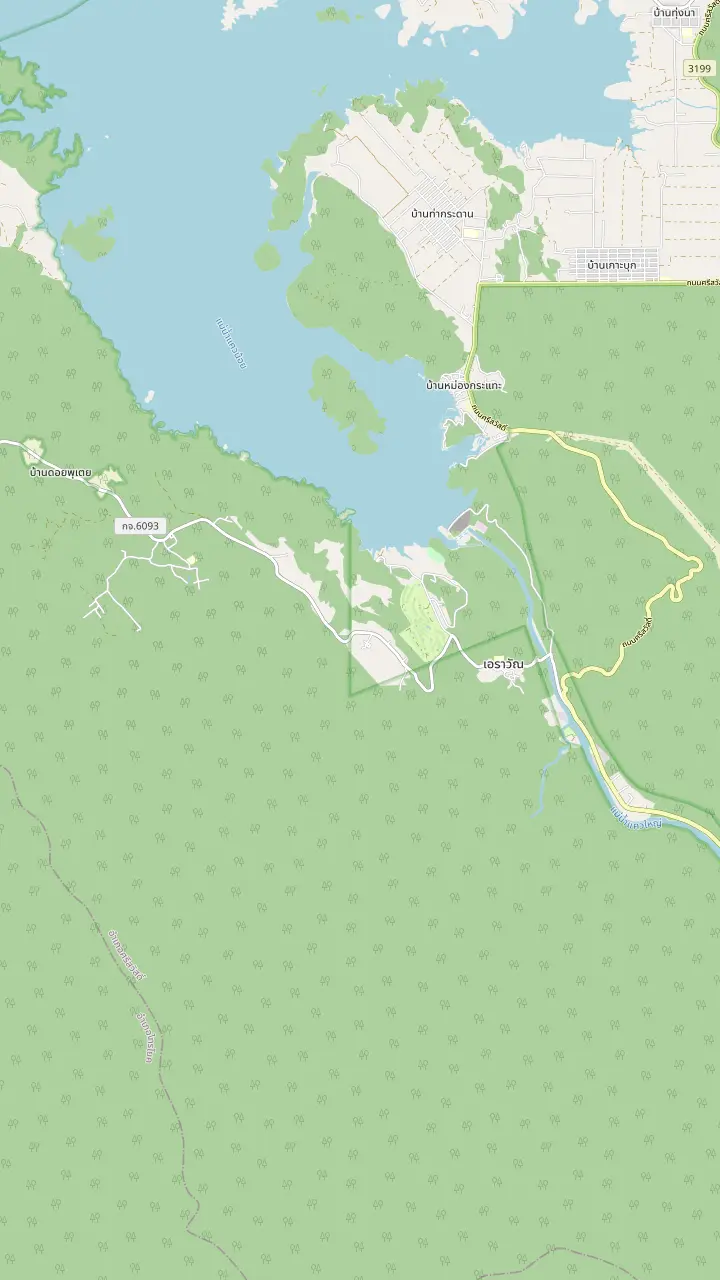
The map point named Erawan National Park, north of the falls; the park office answers on 034-574-222.
Google MapsThe falls and the start of the trail, in the east of the park near the headquarters.
Google MapsPhra That Cave, which the park authority shows with curtains of stalactites.
Google MapsThe Srinagarind Dam, on the same road as the park.
Google Maps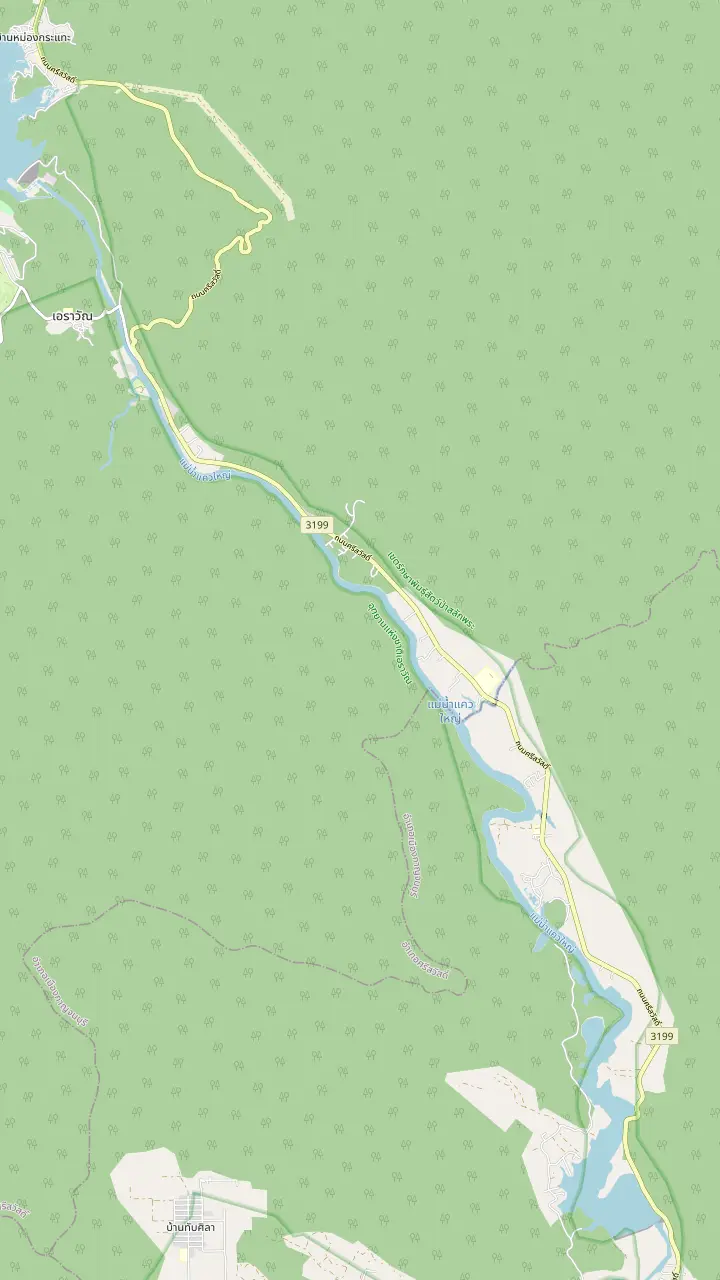
The falls and the start of the trail, in the east of the park near the headquarters.
Google MapsA hotel near the falls on the map, shown only to place lodging near the entrance.
Google MapsA small lodging north of the falls, on the way to the dam.
Google MapsA raft-room resort on the Kwae Yai river listed by the Department of Tourism, with breakfast and activities included.
Google MapsA camping ground beside the River Kwai in Chong Sadao, listed by the Department of Tourism.
Google MapsMaps © OpenStreetMap contributors
A walk up the staircase of limestone pools inside Erawan National Park: what each stretch looks like, where the water is easiest to enjoy, how the hike behaves in wet weather and what to carry.
Editorial team, erawanwaterfalltour.quest · Updated November 12, 2026 · Quick read: 8 min
Summary view
Erawan Falls national park is not one drop of water but a staircase. The Department of National Parks describes the falls as dividing into 7 major tiers.6 The government tourism directory adds that every level holds a basin you can step into, with Mong Lai Creek feeding the whole system from the mountain and the cliff.1 So the place works as a chain of pools, each one a destination that you reach by walking up from the one before.
On paper the geometry is gentle. The park authority measures the run of the water at 1,500 metres of limestone, stepping down like natural stairs with emerald green pools between the steps.2 That is a long ribbon for a waterfall, and it explains why people who arrive expecting a single viewpoint end up spending the whole visit moving upstream. Nothing here is a spectacle you see from a platform; it is something you walk through, wet shoes included.
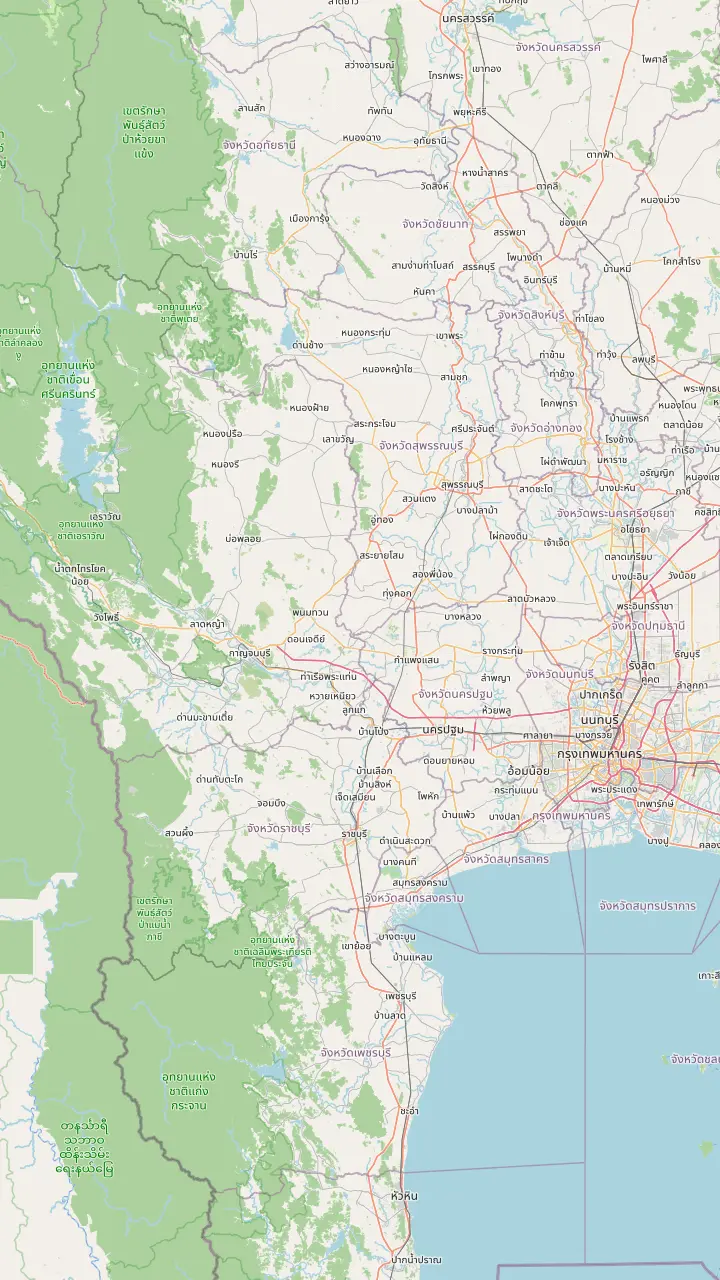
The falls sit in the east of the park, close to the park headquarters.7 In practice that means the approach is short and the effort comes later, as the path leaves the first pools behind. Think of the visit as a climb with built-in rewards: every few minutes of walking, another pool opens beside the path, and you decide whether to keep going or to stop and cool off. Arrive with a plan for the pools you want, rather than a plan to see everything.
Tier by tier
| Stretch | What it is known for | Worth knowing |
|---|---|---|
| Near the start | Pools close to the headquarters7 | Busiest, easiest access |
| Water slope | The drop the authority singles out3 | A 1 kilometre nature trail8 |
| Big pool | A large, cool pool with polished rocks9 | A natural place to rest |
| Summit | A rock like an elephant's head4 | Gave the falls their name |
| After floods | Only the water slope may be open5 | Check with the park office |
The authority's descriptions, tier by tier, plus the access note from the tourism directory.3,1
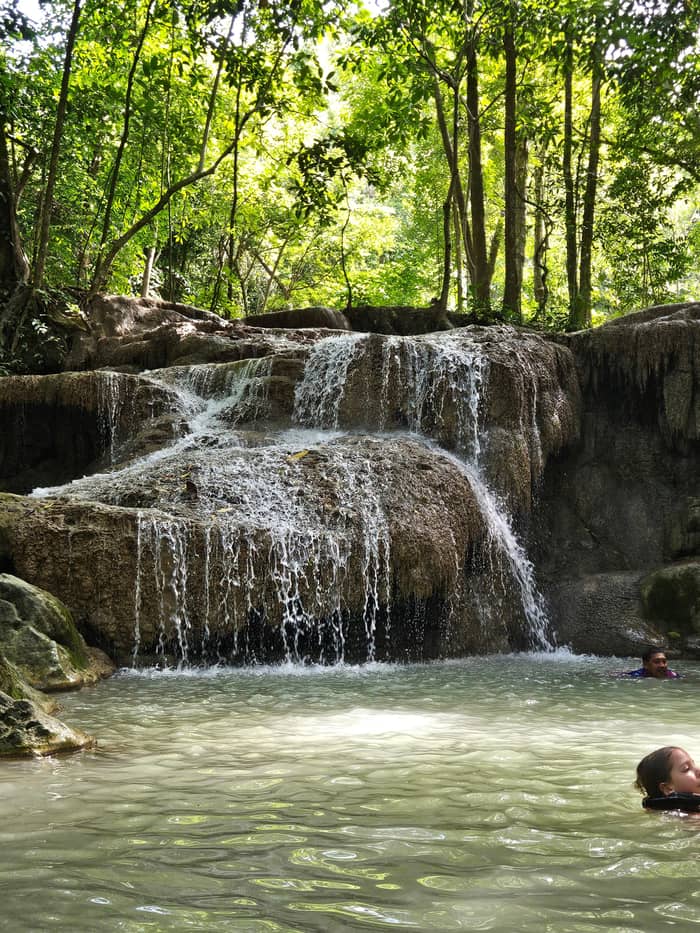
The first pools below the middle of the staircase are the part of the park everyone sees, and the reason is simple access. They lie nearest to the headquarters and the starting point of the path, so even visitors who plan only a short stop reach them. Expect company: this is where families settle, where groups regroup after the walk from the vehicles, and where the first photographs of the day are taken from the edge of the water.
There is a practical benefit to staying low if the day is short. The falls open at 7.30 and close at 16.00 each day, says the tourism directory,10 and a small-group day trip does not leave a great deal of margin inside that window. The small-group tour from Bangkok budgets 1 hour for the park visit plus 1 more for hiking and swimming. Visitors on a schedule like that should choose early which stretch of the staircase they want, rather than drifting upward until the clock decides.
Look at the rock before you step on it. The lowest pools are the busiest, which means the stone at the edge is the most polished by bare feet and wet soles. Wear shoes that grip when wet and keep sandals for the pool itself, since the water is where you want your feet cool, not the path. A dry bag or a plastic-free pouch for the phone saves a good deal of worry, and a small towel makes the rest of the climb more pleasant.
If one stretch gets the postcard treatment, it is tier 2. The department says it is where the water slides off the rock slope most beautifully.3 That is the park's own judgement rather than ours, and it matches what the path itself says: tier 2 is also where the authority laid a signed nature trail, 1 kilometre long.8 A place chosen for signs and a trail is a place meant to be looked at slowly.
This is also the tier to know about on a wet day. The park authority explains that in normal conditions visitors can walk up and see every tier, but when floodwater arrives only tier 2 may be open to visit.5 So if your dates fall in the wet season, tier 2 is the stretch that most reliably forms the core of the visit, and the rest is a bonus. Check with the park office before you set off, because the situation changes with the rain and a closed upper path cannot be bargained with.
For photographs, tier 2 rewards patience more than gear. Stand back from the sliding water and include the rock slope in the frame, so the picture shows the drop and not just white foam. A slow shutter makes the water silky if you carry a small tripod, but a phone braced on a rock gets a long exposure too. Early in the open day, before the pools fill with swimmers, the water looks cleanest and the surface is calmer. The Erawan National Park hike rewards a steady pace, so rest at each pool instead of pushing for the top.
Pick your stretch
Say how much time and energy you have, and the tiers sort themselves.
If I have an hour at most
The first pools and the water slope
The slope is the authority's chosen drop and is also the one to keep if floods arrive.3,5
If I want one long swim
The big cool pool
A large, cool pool with polished rocks is the natural rest stop.9
If I want to say I reached the top
The elephant-head rock
Set a turnaround time first, then climb to the rock that named the falls.4
If I am visiting in the rainy season
The water slope and the lower pools
Floodwater can leave only tier 2 open, so plan around it.5
If I want a quiet walk with signs
The nature trail
A 1 kilometre trail with interpretive signs starts at tier 2.8
Where to swim
Easy
Closest to the start
Relaxed
Halfway up
See the day trip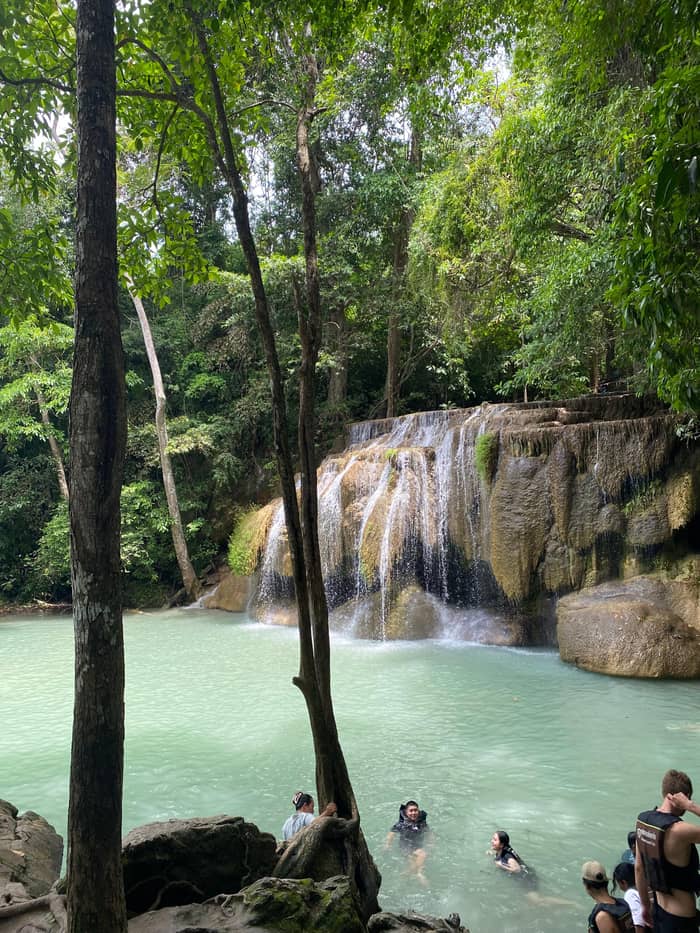
Summit
The top
See the day tripBetween the lower pools and the top, the staircase turns into forest walking. The path climbs beside the water through shade, crossing roots and rock steps, and the scale of the place changes: fewer people, more sound of water, and a clear sense of leaving the car park behind. This is the stretch that the park authority has in mind with its 1,500 metres of stepped limestone,2 and it is the part where good shoes pay for themselves.
Tier 5 is the one the authority describes as a big, cool pool, with rocks smoothed by a very long time.9 For many visitors it becomes the natural place to rest: the pool is large enough to share, and the polished rocks make comfortable seats. Anybody planning to swim in one place only should consider doing it here rather than at the crowded lower stretch, provided time allows the climb and the water level is safe on the day.
Be honest about your own pace. Walking up a series of steps, some of them wet, in tropical weather is a work-out rather than a stroll, and a visitor who sets out in the hottest hours will feel it by the middle tiers. Drink before you are thirsty, rest at each pool and accept that the upper tiers are optional. Comfortable shoes and spare clothes for after the swim are worth packing.
Up the staircase
Near the start
The busiest water, closest to the headquarters, with the easiest access.7
Low-middle
Mid-staircase
Shady climbing beside 1,500 metres of stepped limestone.2
Halfway up
A large, cool pool with smoothed rocks, good for a long rest.9
The summit
A rock above the top tier that looks like an elephant's head.4
The way down
Rest, rinse the rock dust off in the pools and head back before closing.10
At the top of the staircase the park keeps its name. On tier 7 a rock above the water looks like the head of the elephant Erawan, and that resemblance is where the falls got their name.4 The authority adds that the falls were first known as Sa Dong Mong Lai, after the Mong Lai stream that rises on Ta Mong Lai peak.20 So the title has an older layer, and the elephant is a later, more poetic label for the same water.
The wet months are when the top tier earns the comparison. In that season, the authority says, the water pours from the elephant head with such strength that the falls can be seen from afar.12 That is a promise about volume, not about swimming: when the flow is strong the upper pools are also the ones that floods can take away from visitors, so the page on weather and the best time to visit is worth reading before you choose a date.
Reaching the top is a goal that deserves an honest plan. It is the last and the steepest effort of the visit, and tired legs make wet stone harder, not easier. Set a turnaround time before you start climbing, and respect it even if the top is only a few minutes away. The pools lower down are not a consolation prize: many people find the middle stretch the most pleasant part of the whole day, and the descent is a good time for a final swim.
Video
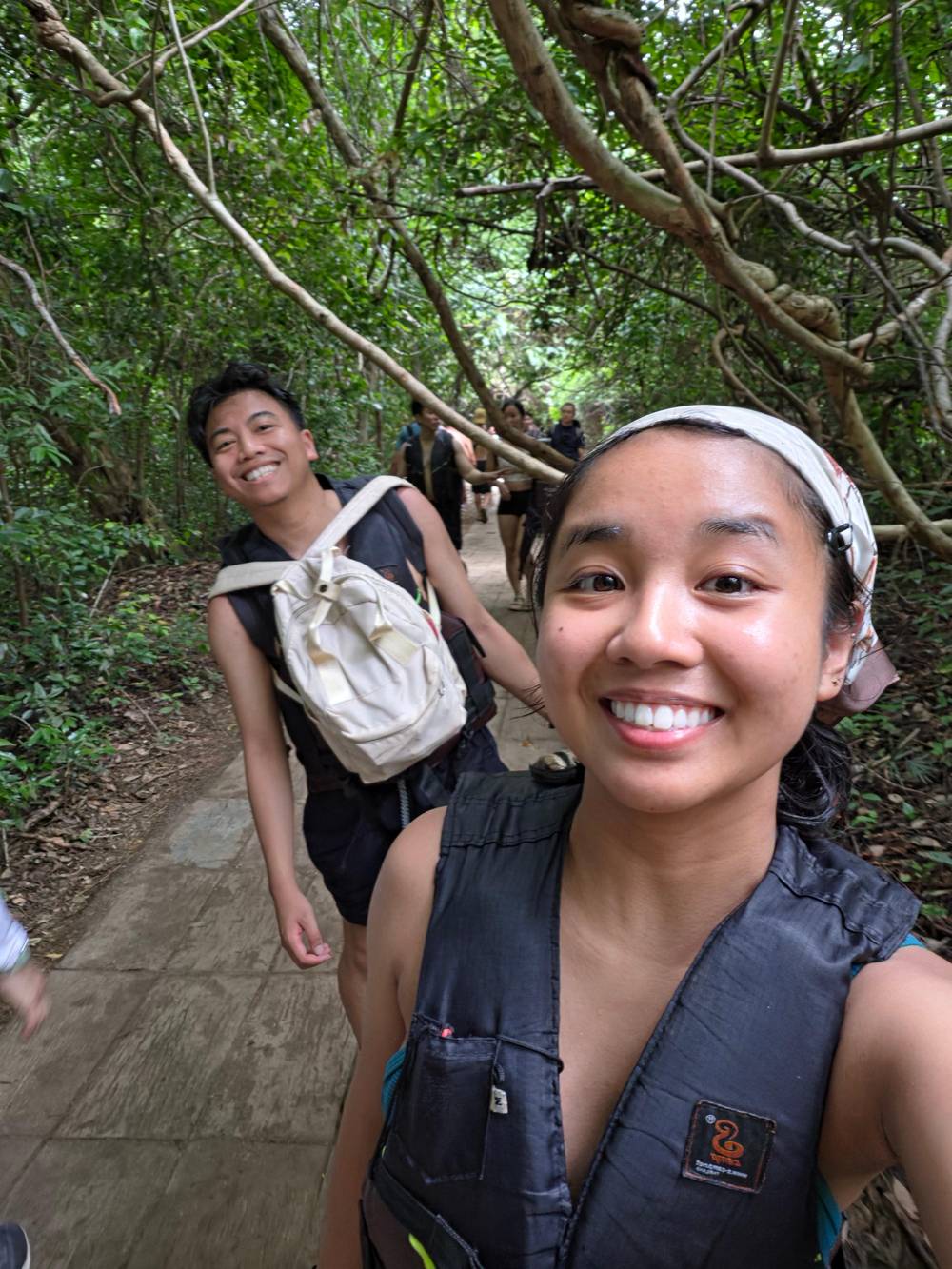
Chante & Tristan on YouTube · The video waits until you tap play to load.
a dip in the emerald-green pools of Erawan Falls, where fish gently nibble at your feet, is an unforgettable experience
Before you climb
Erawan National Park photos fall into three kinds: the wide shot of the pools in green light, the slow-water close-up and the people-in-the-water frame that shows scale. A wide-angle phone lens handles the first, a steady hand or a rock the second, and the third needs only a friend who is willing to swim. TAT's newsroom mentions small fish that nibble at your feet in the green pools,21 so do not be surprised if a frame ends in laughter.
The whole walk is best treated as a series of short climbs with swimming stops, not a single march. Allow time at each pool, bring water and a snack that is not wrapped in single-use plastic, since all 155 national parks ban single-use plastic and foam packaging.22,19 Wear a swimsuit under your clothes, bring a change for the walk back and keep valuables in a small waterproof bag that you can carry with one hand.
Timing matters as much as equipment. The gate hours run 7.30 to 16.00,10 so arriving early gives the cleanest light and the calmest water before the busiest hours, while a late arrival leaves little time for the upper tiers. If your trip crosses a wet spell, remember tier 2 as the dependable stretch,5 and if the day is dry, take the extra time to see the middle tiers and tier 7, which the park authority singles out for the elephant-head rock.4
FAQ
Normally every tier can be visited, but when floodwater arrives only tier 2 may be open to visitors.5
A rock above the falls on tier 7 resembles the head of the elephant Erawan, which is the origin of the name.4
The falls were first called Sa Dong Mong Lai, after the Mong Lai stream that rises on Ta Mong Lai peak.20
The park authority puts the run of the water at 1,500 metres, like natural stairs with emerald pools between the steps.2
The authority describes tier 5 as a big, cool pool with rocks smoothed over a very long time.9
Sources
Further reading
Planning a day at Erawan Falls? Ask a real person here.